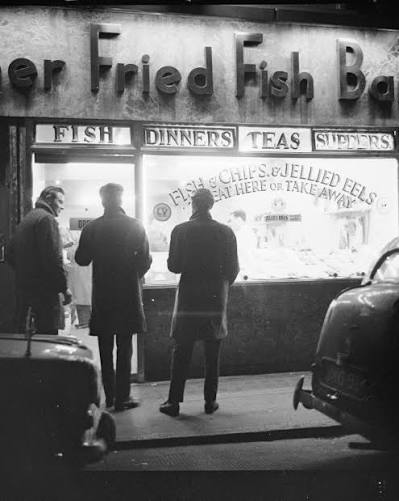
The Glorious History of Fish and Chips
There are few things more comforting than the smell of vinegar drifting out of a chip shop on a cold evening. Here at Britannia Fish and Chips, we don't just serve up the nation's favourite takeaway — we're proud custodians of a tradition that's over 160 years in the making. So grab a portion (extra scraps, obviously), and let's take a wander through the deliciously tangled history of fish and chips.
An Unlikely Royal Wedding Started It All
Believe it or not, the story of fried fish doesn't begin in a British chippy at all — it begins with a royal marriage in Portugal, five centuries ago. When Sephardic Jews were expelled from Spain and Portugal following the Inquisition, many fled to England, bringing with them a dish called peshkado frito: white fish, coated in flour, and fried. It was a way of preparing fish that could be cooked in advance and eaten cold on the Sabbath, when cooking wasn't allowed.
Fried fish quietly became part of London life over the following centuries. Even Charles Dickens mentions a "fried fish warehouse" in Oliver Twist. But fried fish, on its own, was still just... fried fish. It needed a partner.
Enter the Chip
Meanwhile, up in the north of England, an entirely separate food revolution was underway: the humble fried potato. Chip-eating had become popular across the industrial towns of Lancashire and Yorkshire, fuelling factory workers with cheap, hot, filling food.
Nobody can quite agree on who had the genius idea to put the two together — and honestly, we think that's part of the fun. Britain has been arguing about this for over 150 years, and we're not going to be the ones to settle it. But here are the two main contenders for the crown:
Joseph Malin — London, 1860. As the story goes, a 13-year-old boy from a family of Jewish rug-weavers started frying up fish and chips and selling them from a tray around his neck on the streets of the East End. He soon opened a proper shop on Cleveland Way, near Bow. Malin's stayed in the family for over a century, finally closing its doors in the early 1970s — by which point it had been recognised as the world's oldest fish and chip business.
John Lees — Mossley, near Oldham, 1863. Up north, John Lees was said to be frying up fish and chips from a wooden hut in the local market before setting up a permanent shop nearby. Ever the confident marketer, he had a sign put in the window declaring: "This is the first fish and chip shop in the world." Bold claim, John. Bold claim.
Whoever truly got there first, one thing's for certain — once fish met chip, there was no going back.
A Nation Falls in Love
The timing could not have been better. Britain was industrialising fast, railways meant fresh fish could reach inland towns within hours of being landed, and working-class families needed cheap, hot, satisfying food after long factory shifts. Fish and chips ticked every box.
The dish spread like wildfire. By 1910, there were over 25,000 fish and chip shops across the country. Twenty years later, that number had shot up to more than 35,000 — at a time when the entire population of the UK was under 45 million. That's an extraordinary number of chippies for a country that size, and it tells you everything about how deeply this dish had wormed its way into the British soul.
The Dish That Refused to Ration
Fish and chips didn't just survive hard times — it got the country through them.
During both World Wars, fish and chips remained conspicuously off the ration list. Prime Minister David Lloyd George is said to have deliberately protected the trade during the First World War to keep morale up on the home front, and by the Second World War, chip shops had become a genuine lifeline. Queues would stretch for hours the moment word got round that a shop had fish in. When supplies ran low, some shops got creative — one Leeds chippy famously sold homemade fish cakes with the slightly alarming disclaimer: "Patrons: we do not recommend the use of vinegar with these fish cakes."
Winston Churchill reportedly called fish and chips "the good companions," and it's not hard to see why. In an era of grey skies and greyer news, a hot parcel wrapped in paper was one of the few reliable joys left.
Wrapped in Tradition (Literally)
For most of the 20th century, your chips came wrapped in old newspaper — a practice steeped in nostalgia, if not exactly food hygiene standards by today's rules. It wasn't until health regulations tightened in the 1980s and 90s that shops moved over to plain or printed paper. Chip-shop purists still mourn the smudgy ink smell a little.
Still Frying Strong
Today there are still well over 10,000 fish and chip shops across the UK, serving up something in the region of 200+ million portions every single year. Fish and chips has survived world wars, rationing, the rise of the curry house, the kebab shop, and the delivery app — and it's still standing tall as the nation's favourite takeaway.
That's a lot of history behind every portion we serve. So next time you're tucking into a Britannia fish supper, know that you're not just having your tea — you're taking part in a very British tradition that's been keeping the nation fed, warmed, and happy since the 1860s.
Salt and vinegar? Go on then. It'd be rude not to.